
It was 11:14 p.m. on a Tuesday. I came down for a glass of water and found a pan of oil smoking on the stove, moments from igniting. That near-disaster sent me searching for the best smart smoke detector for our home — one that wouldn’t just scream at the walls but would alert my phone whether I’m asleep or away.
After testing the top options, the Kidde Smart Smoke & Carbon Monoxide Detector became the clear winner for our family.
I grabbed the pan, got it off the heat, cracked a window. Heart hammering the whole time.
The smoke detector? It went off thirty seconds later. When I was already standing there holding the pan.
Here’s what hit me afterward: I got lucky. I was home. I was awake. What if I’d been asleep? What if I was away for work? Our old detector would have screamed into an empty kitchen. Two kids upstairs. Nobody to hear it in time.
That was the night I went down a rabbit hole on smart home security for families. And that’s how we ended up with the Kidde.
So are smart smoke detectors actually better than regular ones?
A smart detector does everything a regular one does. But it also sends a push alert to your phone. Text or email too. The moment it detects smoke or carbon monoxide. That matters when you’re away, asleep, or in a room too far to hear the alarm.
Think of it this way. A regular detector screams at the walls. A smart detector screams at the walls and calls your phone at the same time.
There’s also the sensor question. Most cheap detectors use ionization sensors. Those catch fast, flaming fires well. But they miss slow, smoldering fires — the kind that creep behind walls or through furniture. The Kidde uses a photoelectric sensor for smoke. It catches smoldering fires early. It also has a separate electrochemical sensor for carbon monoxide.
Why I chose the Kidde as the best smart smoke and carbon monoxide detector for our home
I looked at three options. The Nest Protect, the First Alert SC5, and the Kidde Smart. The Nest Protect was the gold standard for years. Honestly, it might still be the best detector ever made. But Google stopped selling it. It’s gone.
The First Alert SC5 replaced it. Good reviews. Works with Google Home. But at $129 a unit, buying enough for a whole house hurts fast.
The Kidde Smart came in around $80. It connects straight to your home Wi-Fi. No hub needed. It works with both Alexa and Google. Push alerts, texts, emails. It links up with other Kidde detectors too. When one goes off, they all go off.
New to all this? Our smart home setup guide is a good read before you spend a penny.
For our house and our budget, Kidde made the most sense. That’s the honest answer.
What it’s actually like to live with the Kidde for six months
Let me be straight with you. The first month nearly did me in.
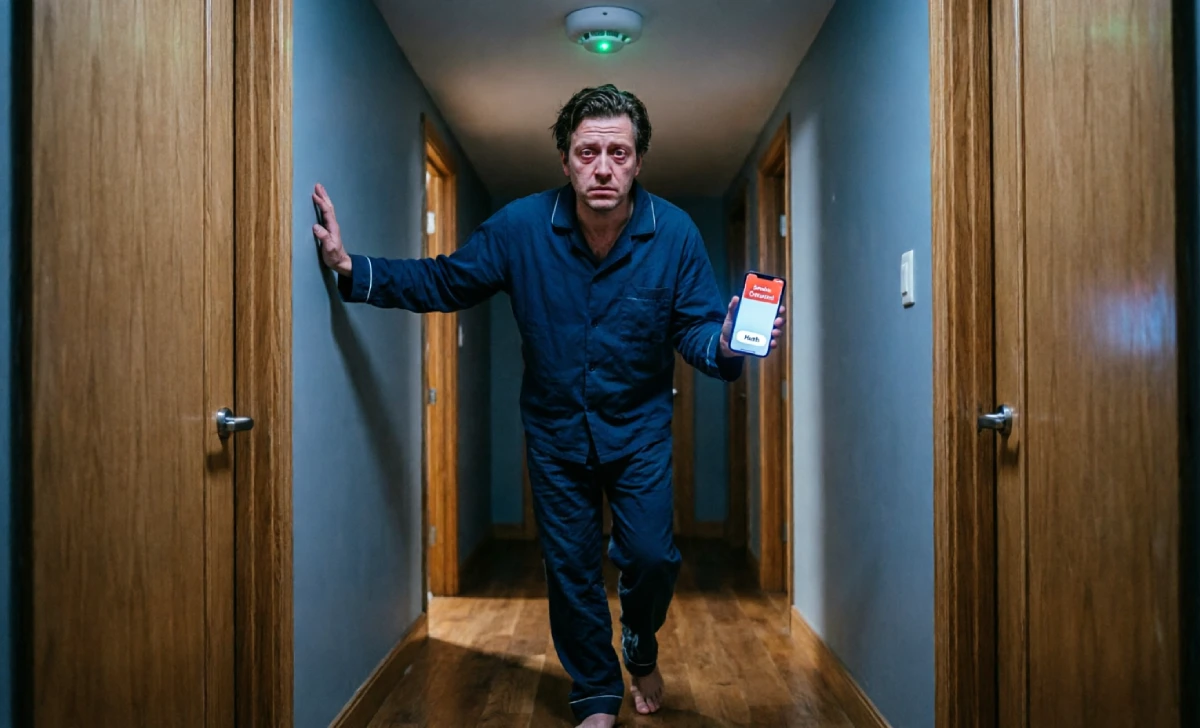
Week two, 2:47am. Full alarm. I flew out of bed with my heart in my throat. Ran down the hall checking every room. Nothing. No smoke. No fire. The kids were awake and terrified. My wife was furious.
False alarm. Steam from the bathroom had drifted down the hall.
Week four, it happened again. I’d been cooking bacon without the range hood on. My fault, sort of. But still.
Instead, I called Kidde support. Spent twenty minutes going through things with them. Here’s what I found out: placement is everything. I’d mounted it twelve feet from the kitchen. Too close. The manual says fifteen feet minimum. I moved it back. I also turned on the Hush feature in the app. That lets you silence a false alarm from your phone — no chair, no ladder, no 3am cursing.
After those two changes? Zero false alarms in five months.
The voice alerts are brilliant. It doesn’t just scream. It says “Fire detected” or “Carbon monoxide detected.” In a real emergency, your brain needs words. Not just noise. Not just noise.
The speed is real too. In my own tests, my phone buzzed within eight seconds of smoke reaching the sensor. Eight seconds. That’s not a nice-to-have. That’s a life-safety feature.
How to connect your smoke detector to your phone (easier than it looks)
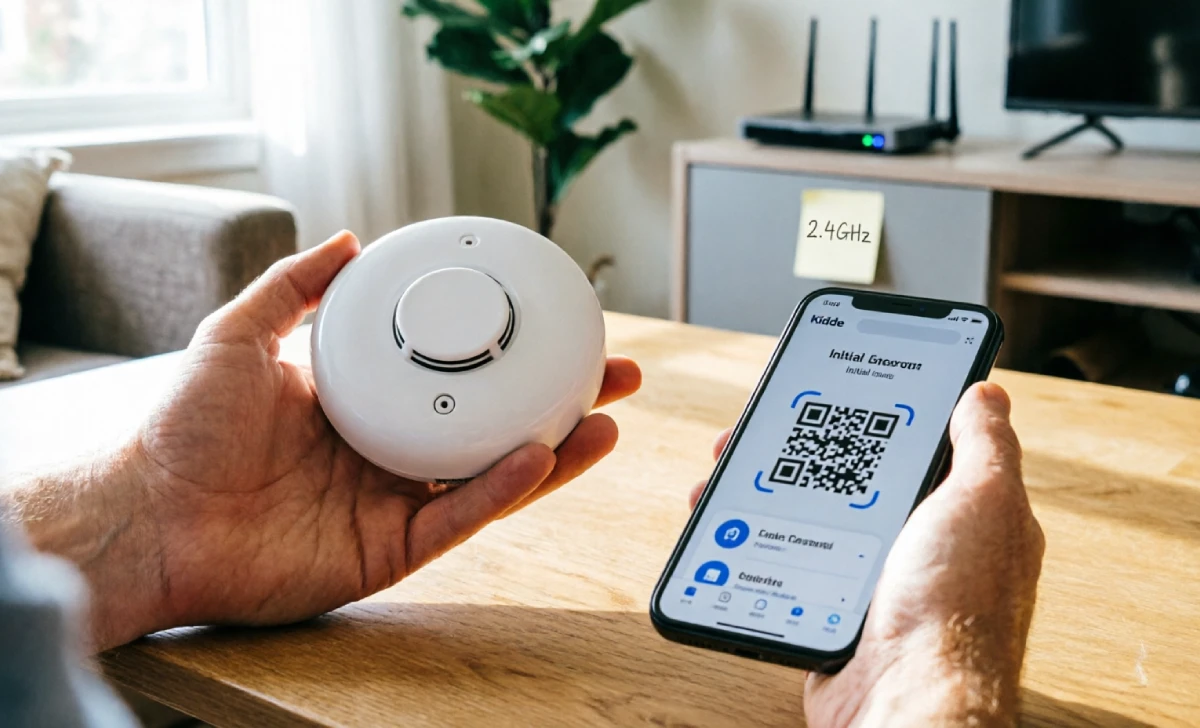
The whole setup takes fifteen minutes. Here’s how it actually goes.
Download the Kidde app first. Make an account. Pull the detector out and find the QR code on the back. Scan it in the app. It connects over Bluetooth.
Then it asks for your Wi-Fi. This is where most dads get stuck.
The Kidde only works on 2.4GHz Wi-Fi. Not 5GHz. Many newer routers broadcast both bands under the same network name. Your phone jumps to 5GHz automatically — but the Kidde can’t use it.
Before anything else, log into your router. Give your 2.4GHz band its own name. Connect your phone to that band before finishing setup. That one step saves an hour of swearing at the ceiling.
Once you’re on the right network, it’s a firmware update and a quick test. Fifteen minutes. Done.
5 things to do before you mount it (save yourself the headaches I had)
We learned these the hard way. You don’t have to.
Check your router’s 2.4GHz band first. Log in, separate the networks, name them clearly. Do this before you open the box.
Don’t mount it near the kitchen or bathroom. Steam and cooking fumes cause false alarms. Fifteen feet from the kitchen is the minimum. The hallway outside bedrooms is the sweet spot.
Turn on all three alert types in the app. Push notification, text, and email. Phones die. Apps glitch. You want the backup.
Do a live smoke test before you call it done. Light a match, blow it out, hold the smoke near the sensor. Know it works before you need it to.
Use the dust cover during home projects. Drywall dust, sawdust, and paint fumes will set it off. Kidde puts a cover in the box for this reason. Use it.
While you’re thinking about home upgrades, a smart thermostat is another one worth adding to the list. Small buy, big difference.
The honest whole-house plan when you’re not made of money
A 4-bedroom, 2-storey house needs six or seven detectors to meet code. At $80 each, that’s $480 to $560. That stings.
Here’s what we did instead. Smart detectors in three spots: the kitchen hallway, the master bedroom, and the main floor near the stairs. Those are the high-risk zones. That’s where a phone alert adds the most value.
The other bedrooms and basement got quality traditional detectors. Not the $10 ones. We used solid hardwired First Alert units. They link up with the Kidde. When any one alarm goes off, every alarm in the house goes off.
That brought our total from $560 down to about $340. Same whole-house coverage. Same interconnected system. Three smart units where they actually matter.
My honest verdict: is the Kidde Smart the best smoke and carbon monoxide detector for home use?
The pan. The smoke off the oil. Two kids upstairs who had no idea. I got lucky. We don’t build our family’s safety on luck.
The Kidde isn’t perfect. The false alarm issue is real — but it’s totally fixable. Setup is easy once you sort the Wi-Fi. And at $80, it’s the most practical smart detector out there for most families right now.
If you rent and can’t hardwire anything, check the battery-only Kidde models. If you’re all-in on Apple, the First Alert Onelink fits better. Already running Alexa or Google Nest at home? Check out our smart speaker review — the Kidde plugs right into both. No fuss at all.
But for most of us? Real dads, real houses, real budgets? The Kidde does what it promises. It did the job for us.
Set it up right. Place it right. Then go to bed knowing your phone will wake you before the smoke does.

