
It’s 11 p.m. The house is finally quiet. Your toddler is actually asleep, and you finally have a moment to sit down and just breathe. But then the thought creeps in—the one that shows up in the silence. What would happen to my kid if I wasn’t here tomorrow? It’s not a fun thought. It’s heavy. But it comes from a place of deep, fierce love. And it’s exactly the kind of question that leads dads to the most important line in any will: the guardianship nomination.
I know—words like “guardianship nomination” sound like something from a courtroom drama. But here’s the plain truth: it’s simply your way of telling the world, “This is the person I trust to raise my children if I can’t.” Nothing more. Nothing scary. Just a dad making a plan.
In this article, I’ll walk you through exactly what a guardianship nomination is, why it matters more than you think, how to choose the right person, and how to put it in writing without losing your mind. We’ll keep it simple, honest, and judgment-free—just one dad talking to another.
What Is a Guardianship Nomination? (A Simple Explanation for Dads)
The Plain-English Definition No One Gave You
A guardianship nomination is a statement in your will where you name the person—or people—you want to be the legal guardian for your minor children if you pass away. Think of it as your backup plan on paper. It’s not a suggestion you whisper to family. It’s a formal, written record of your wishes, right there in your last will and testament for parents.
If you’re thinking, “Isn’t this just something that takes care of itself?” — unfortunately, no. Without your clear guardian designation in will documents, that decision lands in a stranger’s hands—a judge who doesn’t know your kids, your values, or your story. Naming a guardian is how you make sure your voice is heard even when you’re not there to speak.
Testamentary Guardian vs. Permanent Legal Guardian — What’s the Difference?
Here’s where words get tricky. When you name a guardian in your will, you are naming a testamentary guardian. That simply means a guardian appointed through a will. The court still has to approve the appointment, but—and this is key—judges almost always follow a clear parental nomination of guardian unless there’s a serious problem.
The term permanent legal guardian usually refers to someone appointed by a court without a will in place—often after a long process, and not necessarily the person you would have chosen. Your guardianship nomination is what connects the person you trust to the legal role they need.
Why This One Will Clause Matters More Than Anything Else
What Happens If You Don’t Name a Guardian — The Honest Truth
Let’s talk about the elephant in the room. Many dads avoid this topic because it feels overwhelming, or they assume someone will just step up. But the honest answer to “what happens to my kids if I don’t have a will?” is this: the decision falls to a probate court. Family members might fight for custody. Loving grandparents might end up in a legal battle, all while your children wait in uncertainty.
I’m not sharing this to scare you. I’m sharing it because once you know, you can act. This is what every parent needs to know about naming a guardian. The peace of mind that comes from putting your wishes in writing is enormous. It’s one of the most important things you can do as a father, and it’s a lot easier than you think.
It’s Not Just About Death — Temporary and Standby Guardianship
Here’s something many dads don’t realize: a guardianship plan isn’t only for worst-case scenarios. You can also name a standby guardian for children —someone who can step in temporarily if you’re hospitalized, recovering from an accident, or suddenly unable to care for your kids for a short time.
Imagine this: you’re in an accident and can’t communicate for a few days. Who is authorized to pick your kids up from school? Who can make medical decisions? A temporary guardian if I’m hospitalized can be named in many states, giving you a bridge of safety while you recover. It’s a practical, loving layer of protection that covers real-life emergencies, not just end-of-life planning.
“Who Will Take Care of My Child?” — How to Choose the Right Guardian
Godparent vs. Legal Guardian — They Are Not the Same Thing
One of the biggest myths I hear among dads is, “We already named godparents. That’s covered, right?” Not exactly. Naming godparents is a beautiful religious and spiritual tradition, but it doesn’t carry legal weight. A godparent has no automatic right to custody. You still need to name a godparent as legal guardian in your will if you want that person to have legal authority.

To make this crystal clear, here’s a quick comparison:
| Role | Legal Status? | Is It Automatic? | How to Make It Official |
|---|---|---|---|
| Godparent | No | No | Religious ceremony only |
| Legal Guardian | Yes | Only if named in a will and approved by court | Write it in your will and follow state rules |
Choosing godparents vs legal guardians is a decision every dad needs to think about carefully. You can absolutely choose the same person for both roles—just make sure they’re actually named in your will.
Questions to Ask Yourself Before Naming Someone
When I sat down to decide who would raise my son if I couldn’t, I realized it’s not just about who I love—it’s about who would love him in the way I’d want. Here are some questions to guide you:
- Does their parenting style feel similar to yours?
- Are they emotionally ready for the responsibility?
- Do they have a stable home and the capacity to welcome a child?
- Do they live near your child’s school and extended family?
- Would they honor your values while still being their own person?
- Are they financially stable enough to raise another child?
There’s no perfect answer, and no one will do it exactly like you. But this list helps you think like a dad making a family protection plan, not just a legal choice.
Can a Grandparent, Friend, or Single Person Be a Guardian?
Absolutely. You can name a grandparent, a trusted friend, or even a single person as guardian—so long as they’re willing and capable. The court cares about the child’s best interests, not whether the guardian is married or a relative. Many single dad guardian nomination plans involve naming a sibling or close friend, and that works just as well as naming a couple.
Dads in Real Life — Special Situations Made Simple
What If Your Child’s Mother Is Still Alive?
I hear this a lot: “Do I need to name a guardian if my child’s mother is alive?” The answer is a gentle but firm yes. Here’s why. If something happens to you, your child would typically go to the surviving parent. But what if something happens to both of you at the same time? It’s a hard thought, but it’s the exact scenario where your guardianship nomination matters most. By naming a guardian in your will, you cover that gap and ensure your child isn’t left in limbo.
If you’re a divorced dad, you may wonder about a father’s rights to name a guardian after divorce. Generally, you can name a guardian for your children in your will, but that nomination won’t override the other parent’s rights while they’re alive. Generally, you can name a guardian for your children in your will, but that nomination won’t override the other parent’s rights while they’re alive — especially in a custody battle. It steps in when both parents are gone or the mother is incapacitated. Still, it’s a critical backup every dad should have.
Naming a Guardian as a Single Dad, Divorced Dad, or Stay-at-Home Dad
For single dads, this decision feels especially heavy. You might be the sole legal caretaker. A single dad naming a guardian is an act of pure love—it’s saying, “I’ve thought about my child’s future, and this is the safest path.” If you’re a stay-at-home dad, the same urgency applies. A simple will with guardian for stay-at-home dad can be short and straightforward, but it makes a world of difference. If you’re a divorced dad, you may wonder about a father’s rights to name a guardian after divorce.
Choosing a Guardian Who Lives Far Away or in Another State
What if your chosen guardian lives three states away? That’s okay. It’s not ideal, but it’s workable. You’ll want to address logistics in your will, like who temporarily cares for your child until the guardian can arrive. Some dads name a local temporary guardian for immediate needs and the long-distance guardian as the permanent one. Just be clear in your documents, and talk to both people beforehand.
How to Put Your Guardianship Wishes in Writing — Step by Step

Writing the Guardianship Clause in Your Will (Without Overcomplicating It)
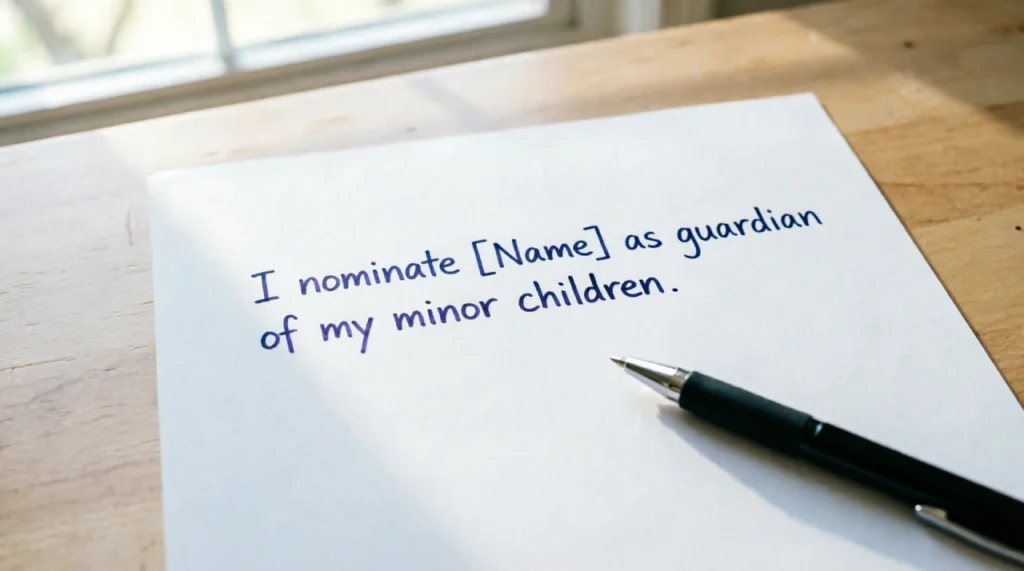
You don’t need fancy legal language. A guardianship clause in a will can be as simple as: “I nominate [Full Name] as the guardian of my minor children if no other parent survives me.” That’s it. Many states even provide a guardian nomination clause example for parents on their bar association websites. You can write a guardianship designation in a simple will using plain language, and it will still be effective as long as your will is signed and witnessed correctly.
Can You Do It Without a Lawyer? What You Need to Know
The question “do I need a lawyer to name a guardian in my will?” pops up constantly. In many cases, no—you don’t. You can create a will yourself using a reputable online service or a state-specific statutory will form. However, if your situation is complex—say, you’re blending families or there’s conflict—talking to an estate planning professional can be wise. The key is simply to do something. Don’t let the idea of not having a lawyer stop you from putting your children’s future on paper.
Always Have a Backup Guardian
Life changes. The person you name today might be unable or unwilling to serve ten years from now. That’s why you should name a backup guardian in a will for children. It’s a second name that gives the court a clear fallback. Think of it as your spare tire. You hope you never need it, but you’re grateful it’s there.
The Conversation Every Dad Should Have with the Chosen Guardian
What to Say (and Ask) Before You Put It in Writing
Before you write anything down, sit down with the person you have in mind. Grab a coffee, or chat after the kids are in bed. You can say something like, “This is hard to talk about, but it would mean the world if you’d be the person to raise our kids if something happened to us.”
Ask if they’re genuinely willing. Listen to their honest thoughts. It might be an emotional conversation, but it’s also one of the deepest gestures of trust you can offer.
Making Sure Your Guardian Understands Your Parenting Values
Share the little things that matter to you. How you handle discipline. The kind of education you value. The bedtime stories you want them to hear. These details aren’t legally binding, but they create a bridge between your love and your guardian’s future care.
What Happens After — Courts, Custody, and Your Kids’ Money
Is a Guardianship Nomination Legally Binding? Almost Always, Yes
Many dads worry: “Is a guardianship nomination legally binding?” The answer is that while a judge has final say, your written nomination carries tremendous weight. Courts generally consider your wishes as the most important factor. So yes, in practical terms, your guardianship nomination is almost always honored unless there’s a clear reason not to—like the named guardian being unfit.
Keeping Your Child’s Inheritance Separate from the Guardian
One worry that comes up: “Does a guardian get my money for the kids?” No, not automatically. You can (and should) name a separate financial guardian or trustee to manage your children’s inheritance and guardian expenses. This keeps your child’s money safe and separate, used for their care, not the guardian’s personal finances. It’s another reason why estate planning for dads involves a few simple pieces, not just one.
Your 5-Minute Guardianship Nomination Checklist
Here’s a super simple action plan to move from worried dad to prepared dad:
- Write down your first choice for guardian and a backup name.
- Have an honest conversation with both.
- Decide if you need a temporary local guardian as well.
- Draft your will’s guardianship clause (it can be just one sentence).
- Sign and witness your will according to your state’s rules.
- Tell your family where the original will is kept.
You don’t have to do all of this today. Just start with number one. That’s already more than most people do.
Frequently Asked Questions from Real Dads
What exactly is a guardianship nomination in a will?
It’s the section of your will where you name the person you want to become the legal guardian of your children if you pass away. It’s your parenting backup plan, in writing.
Why do I need to name a guardian if my child’s other parent is alive?
Because life is unpredictable. If both parents are in an accident together, your nomination ensures the children have a clear, safe home without court battles.
What happens if I never name a guardian for my children?
A court will decide who raises them. The judge might not know your child, your family dynamics, or your wishes. It’s a situation full of uncertainty and possible conflict.
Can I name a godparent as a legal guardian, or is that different?
Yes, you can, but it’s not automatic. You must name them in your will. Without that, their role remains spiritual, not legal.
Is a guardianship nomination legally binding on its own?
It’s not 100% automatic—the court reviews it—but judges almost always follow a clear written nomination unless the guardian is unfit or unwilling.
Do I need a lawyer to name a guardian, or can I do it myself?
You can often do it yourself with a properly witnessed will. Many states offer simple will forms. If your situation is complicated, consider getting help, but don’t let a lack of a lawyer stop you from making a will.
Can I name a temporary guardian if something happens to me suddenly?
In many places, yes. A standby or temporary guardian can be named to step in immediately if you’re hospitalized or incapacitated, until you recover or a permanent arrangement is made.
How often should I update my guardian nomination?
Every couple of years, or whenever a big life change happens—divorce, remarriage, the birth of another child, or if your chosen guardian becomes unable to serve.
We started this talk with a quiet late-night worry. I hope you’re leaving with a quiet peace of mind. A guardianship nomination isn’t about being afraid of the future; it’s about loving your kids so much that you made sure they’ll be safe and loved, no matter what.
You don’t need to figure it all out today. Just take the first step. Think about the person you’d want your children to cook pancakes with, to hear bedtime stories from, and to feel safe with if you weren’t there. Write that name down. That’s your starting point. You’ve got this, Dad. Now go give your kids a hug—and maybe open a note on your phone to write down that name.

