
It’s 3 a.m. The house is silent. Out of nowhere, a thought lands: What would happen to my kids if I wasn’t here tomorrow?
If you’ve been there, you’re not alone. Almost every dad I know has had that moment — and then told himself the same lie: “I’ll figure that out someday.”
This isn’t a legal lecture. It’s one dad sitting down with another to walk through the one document that answers that 3 a.m. question. We’re talking family estate planning for dads in plain, simple language. No jargon, no judgment. Just a calm, practical father’s guide to estate planning that helps you build a simple estate plan for dads who want to protect their kids.
By the end, you’ll know exactly what a will does, how to name a guardian, and the small, doable steps that get this huge weight off your shoulders.
Why Every Dad Eventually Asks, “What Happens to My Kids If I Die Without a Will?”

The 3 a.m. Fear That Deserves a Daytime Answer
That middle-of-the-night worry isn’t morbid. It’s a sign you’re a dad. The good news is there’s a simple tool that turns fear into a plan: a last will and testament. Once you understand it, the panic quiets down.
Intestate Succession in Plain English
When a father dies without a valid will — called dying “intestate” — the government essentially writes a one-size-fits-all will for him. This process, intestate succession, doesn’t know your children’s names or which family member shares your values. It simply follows a generic formula, often creating more stress for the people you love.
Why dads need a will comes down to this: without one, a judge who has never met your kids decides where they sleep and who tucks them in. A will keeps that decision in your hands.
A Will for Fathers Protecting Children – What It Actually Does
More Than Money
For most dads, how a will protects your children has little to do with being wealthy. It’s about being their dad. A will is your voice — the legal way of saying, “Here’s who I trust to raise my kids, and here’s how I want them taken care of.”
The Two Main Superpowers of a Dad’s Will
A will for fathers protecting children does two huge things:
- It names a guardian. The person who will love and raise your children if you and the other parent can’t.
- It directs how your assets are used. You decide how your money and possessions support your kids, and at what age they gain control.
Will vs. Living Trust for Parents – A Simple Comparison
| What to Compare | A Will | A Living Trust |
|---|---|---|
| Main Job | Names guardians and says who gets what | Holds and manages assets for beneficiaries |
| When It Kicks In | After you pass away | When you create and fund it |
| Guardianship of Kids | Yes – this is where you name a guardian | No – you still need a will for that |
| How Assets Are Given | Through probate, or via a testamentary trust | Can avoid probate, more control over timing |
| Typical Dad Who Needs It | Almost every dad with minor children | Dads with larger estates or who want to avoid probate |
For most of us, the will is the essential starting point. It’s the document that names who raises our kids.
Naming a Guardian – The Single Most Important Decision

How to Pick the Right Guardian Without Losing Sleep
Choosing a guardian is heavy — it’s often why we procrastinate. Start with quiet questions: Who loves your children almost as much as you do? Whose home already feels safe and familiar? Who shares your general parenting values? Don’t aim for a clone. Aim for someone whose heart you trust completely.
Single Dads, Blended Families, and the Mum Question
Take James, a devoted single dad to a six-year-old girl. Her mum is in the picture, but James would want his sister to be the guardian. Here’s what he needs to know: a will can’t automatically override a surviving parent’s legal rights. If the mother is alive and has parental responsibility, she will typically become the full-time caregiver. However, James can use his will to clearly state his wishes, and that written expression carries real weight in any court decision. For how single dads can set up a will for their child, understanding this legal reality is critical.
What If My First Choice Says No?
Always name a backup guardian. Life happens — your first choice might be unable to serve when the time comes. A backup costs nothing and gives you priceless peace of mind.
Guardian vs. Custody – The Simple Distinction
Naming a guardian in your will is about who steps in after you pass away. Custody orders are about right now. Your will doesn’t override an existing arrangement, but it gives clear, lasting guidance about your long-term wishes.
A quick way to separate roles:
- Guardian: Raises the children, makes daily and life decisions.
- Trustee/Custodian: Manages the money you leave until the child reaches a certain age.
What Else Should a Dad Include in His Will? The Often-Forgotten Pieces
More Than a House: Digital Assets and the Letter of Intent
When considering what to include in a will to protect your children, don’t stop at physical property. Cloud photos, cryptocurrency, social media — your digital life is part of your legacy. Leave a simple list of what exists and who can access it. Also consider writing a letter of intent, a non-binding note for the guardian about bedtime routines, allergies, and favourite books.
The Testamentary Trust Option
If you don’t want an 18-year-old receiving a lump sum, a testamentary trust (created inside your will) lets someone you trust manage the inheritance until your child is older. It’s a simple way to provide inheritance protection for young children.
Life Insurance and Beneficiary Designations
Your will doesn’t control your life insurance payout — that’s governed by the beneficiary form you filed. Check those forms today. (See our guide on Life Insurance for Dads for more.)
“Can I Write My Own Will as a Father?” – DIY, Online, and When to Get Help
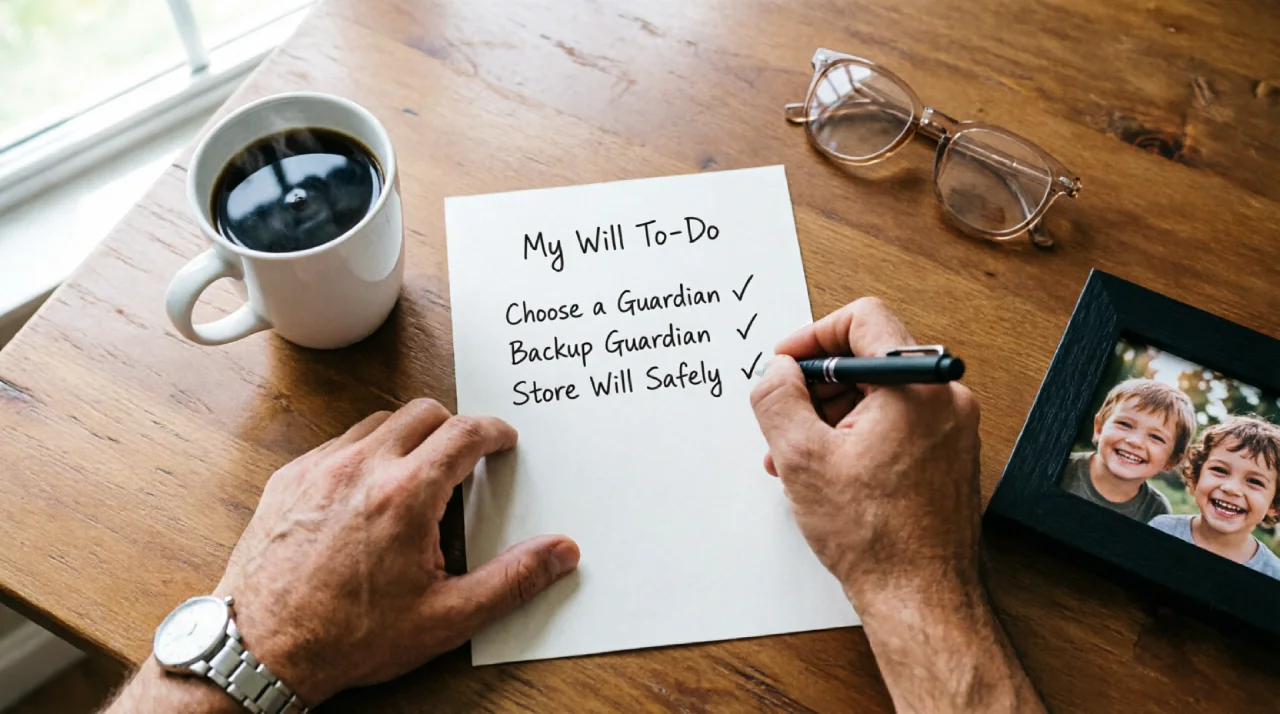
The Kitchen Table Will
A handwritten (holographic) will can be valid in some places if entirely in your handwriting, dated, and signed. But small errors can make it worthless, leaving your kids unprotected. For how to write a will as a dad without a lawyer, the honest answer: yes, for simple family situations, but proceed with care.
Online Will Services vs. a Professional
A simple will template for fathers who are not lawyers from a reputable online service can be a solid start. For straightforward families, it’s often enough. But if you have a blended family, a child with special needs, or property abroad, sitting down with a qualified professional is the safer path. This isn’t about pushing services — it’s about making sure your will actually holds up when your children need it most.
Estate Planning Checklist for Dads with Minor Children
Here’s a straightforward estate planning checklist for dads with minor children:
- ✅ Choose a guardian (and a backup guardian).
- ✅ Decide how assets will be managed — outright or via a trust.
- ✅ List digital assets, accounts, and passwords for your executor.
- ✅ Review and update life insurance and retirement beneficiary designations.
- ✅ Store the signed will somewhere safe, fireproof, and tell a trusted person where it is.
- ✅ Set a yearly calendar reminder to revisit after any major life change.
Even writing down one guardian name tonight moves you forward.
How Often Should a Dad Update His Will? The Life-Event Rule
How often should a dad update his will? Every 2–3 years, or immediately after a life event: marriage, divorce, a new baby, the death of a named guardian, a move to a different state or country, or a big financial shift. A will from 2015 probably doesn’t reflect your family today. A quick 30-minute review can make all the difference.
Common Dad Mistakes That Can Undo a Good Will
What dads forget in their will often causes trouble:
- Forgetting a backup guardian — if the first choice can’t serve, the court decides.
- Leaving a lump sum to an 18-year-old with no guidance.
- Not updating after a second marriage, accidentally disinheriting children from a first relationship.
- Assuming the will covers life insurance and jointly owned property — it doesn’t.
- Failing to have a conversation with the people you’ve named.
FAQ: The Questions Dads Ask When They’re Finally Ready
What happens if a dad dies without a will?
A court decides who gets your assets and, critically, who raises your children, without your input.
How do I name a guardian for my child in a will?
Include a clear clause stating your chosen guardian and a backup. The will must be legally valid where you live.
Can I write my own will as a father?
Yes, for many simple situations, if formal requirements are met. For complex families, a professional review is wise.
What’s the difference between a will and a trust for my kids?
A will names a guardian and distributes assets via probate. A trust holds assets outside probate and can offer more control over timing. Most dads need a will first.
Can a mother override a father’s will guardian choice?
If the mother is alive and has parental responsibility, she typically becomes the caregiver. The will’s guardian appointment takes effect if she is unable to act.
What’s the first step for a dad with no estate plan?
Write down the name of the person you would want to raise your children. That’s the hardest decision. The rest is paperwork.
Tucking Your Kids In, Even When You’re Not There
Estate planning isn’t about money or fancy documents. It’s about love — the deeply dad thing of making a plan. Tonight, after bedtime, write down one guardian name. That’s your first step. You can handle the rest from there.
If this guide helped, or if you have your own worries and questions, drop a comment below. Let’s keep the conversation going, dad to dad.

