
I’ll never forget the first night in our old house. My wife tiptoed to the kitchen for a glass of water, and the hallway floor let out a screech that could wake the dead. Our baby woke up. The dog went nuts. Right then I knew — the squeaky wood floors had to go.
I’m happy to report that most squeaks are surprisingly easy to silence. You don’t need a contractor or a second mortgage. With a little patience and the right approach, you can walk across your floors in peace.
Let me show you exactly what worked for me, what didn’t, and how to pick the right fix for your floor.
Why Do Wood Floors Squeak?
A squeaky wood floor is just friction with a soundtrack. Two things rub together that shouldn’t — usually floorboards against each other, or a board moving against the subfloor or a nail.
As wood ages, it dries out and shrinks a tiny bit. The nails that once held everything tight can loosen. Seasonal humidity changes make things expand and contract. Gaps appear. Then when you step on the floor, something moves and makes that high‑pitched creak.
It can happen in any home, new or old. In fact, my house was barely five years old when the symphony started. It doesn’t mean your foundation is crumbling. It usually just means wood is being wood.
Quick answer: Floor squeaks happen when boards or the subfloor rub together, often due to loose nails, shrinkage, or humidity changes. The fix is usually to stop the movement or lubricate the friction point.
Find the Exact Squeak Before You Fix Anything
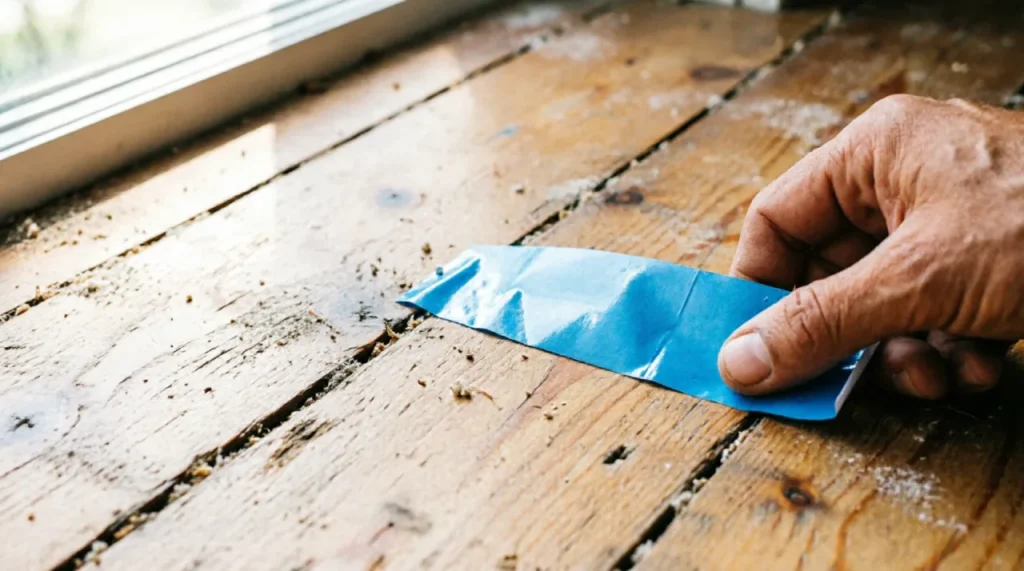
I wasted an afternoon once by fixing a floorboard that wasn’t even the problem. Don’t be me.
Walk slowly across the room in bare feet or socks. Have someone else do it too while you listen from below if you can. The sound usually comes from a specific spot, not the whole floor.
Mark the squeaky areas with a piece of painter’s tape. Pay attention to seams between boards and places where the floor meets a wall or doorway. If you can get under the floor in a basement or crawlspace, have a helper walk above while you listen for the loudest point.
Knowing exactly where the noise lives changes everything.
The Easy Fixes You Can Try From Above
Most of the time, you don’t need to go underneath the floor. Start here.
The Powder Trick
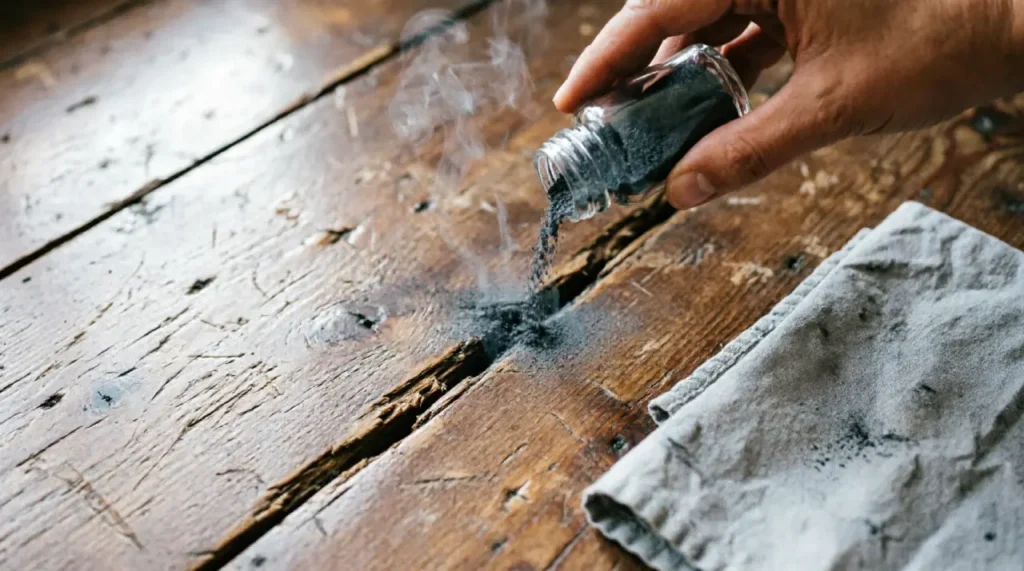
If the squeak comes from between two floorboards, dry lubricant is your new best friend. I’m talking about powdered graphite, talcum powder, or powdered soapstone. Not cooking oil, not WD‑40 — those can stain wood or attract dirt.
Sprinkle a small amount along the squeaky joint. Place a rag over it and step back and forth a bunch of times to work the powder down. Vacuum up any leftovers.
This fix took me five minutes and cost about six dollars. For light squeaks, it works like magic.
Tighten Down the Boards

Sometimes a floorboard has come a little loose from the subfloor. If you can see the nail heads popping up, or you feel movement under your foot, this is likely your problem.
For a discreet fix, use finish nails — the ones with tiny heads — and drive them into the squeaky spot at an angle. Better yet, pre‑drill a tiny pilot hole and use trim‑head screws. They hold better and won’t pop out as easily.
Drive the fastener just below the surface and fill the hole with wood putty that matches your floor. Nobody will ever see it.
One warning: don’t drill into a floor without knowing what’s underneath. You don’t want to hit a water pipe or electrical wire. I usually keep to the obvious areas near the nails that are already there.
Grab a Squeaky Floor Repair Kit
If you’re not into improvisation, home centers sell repair kits with special breakaway screws. They come with a depth‑control fixture so you can drive the screw through the floor and into the joist, then snap the head off below the surface.
I’ve used one of these kits and it honestly made me feel like a pro. They’re around twenty to thirty dollars and take about twenty minutes. Totally worth it for stubborn spots.
When You Can Get Under the Floor
If your house has an unfinished basement or a crawlspace, you’ve got more options — and they’re often invisible from above.
Fill the Gap with a Wood Shim
Look for a gap between the subfloor and the top of the floor joist. Even a tiny space can cause noise when the subfloor flexes.
Gently tap a wood shim into the gap until it’s snug. Don’t go crazy and lift the floor — just close the space. Then add a little construction adhesive on the shim to keep it in place.
I keep a bag of cedar shims in my toolbox; they’re cheap and do the job perfectly.
Add a Bridge Between Joists
If a whole section of floor feels bouncy or the squeak is widespread, the joists might be twisting slightly. You can stiffen things by adding solid blocking between two joists.
Cut a 2×8 to fit snugly between the joists under the noisy area. Apply construction adhesive on the ends and screw it in place through the joist sides. This spreads the load and quiets the movement.
This takes a little more skill, but if you’re comfortable using a drill and a saw, it’s totally doable in an afternoon.
Special Situations That Come Up Often
What if I have carpet over my wood floor?
You can still fix the squeak without pulling up the carpet. Use a finish nail or a special carpet‑friendly screw. Drive it through the carpet and pad into the subfloor, then use a nail set to sink it below the carpet surface. Fluff the fibers, and it’s like nothing happened.
What about a squeak in the upstairs floor?
Upstairs floors usually mean you can’t get below them. That’s when the powder method and surface screws become your go‑to tools. You’ll be working from above, so pick a method that leaves a tiny mark.
How Much Does It Cost to Fix a Squeaky Floor?
I love this part, because it’s way more affordable than people think.
- Powdered graphite or talc: $5–10, and a single bottle lasts for years.
- Finish nails and wood filler: $15 if you have a hammer and nail set already.
- Repair kit: $20–40, includes special screws and the snap‑off tool.
- Shims and construction adhesive: under $20 total.
- Blocking and joist work: maybe $50–75 in lumber and hardware, if you own basic tools.
Calling a professional usually starts around $200–300 for a few isolated spots and can climb if structural repairs are needed. But honestly, most squeaks never get to that point.
When It’s Time to Call a Pro
I’m all for DIY, but there are signs you shouldn’t ignore.
If the floor feels spongy over a large area, or if you can see sagging or cracking drywall below, you might have a structural issue. Water damage can rot subflooring and joists, and that’s not a simple squeak fix.
Also, if you’ve tried multiple methods and the same spot keeps coming back, a pro can assess whether the subfloor was poorly installed or the joists are undersized.
There’s no shame in calling for backup.
Keep Future Squeaks Away (A Little Prevention Goes a Long Way)
My current house hasn’t developed a single creak yet, and I credit a few things I did during installation.
If you’re putting in new wood floors, let the wood sit in the room for at least a few days to acclimate to the humidity. Use the right nails and glue, and follow the spacing guidelines. A proper expansion gap around the edges lets the floor move without buckling or squeaking.
If you already have finished floors, run a dehumidifier in summer and a humidifier in winter. Keeping the humidity between 35% and 55% reduces the expansion‑contraction cycle that loosens things over time.
And clean up spills fast. Water that seeps into the gaps can warp boards and create a whole new set of noises.
Final Thoughts
A squeaky floor is annoying, but it’s rarely a disaster. Most fixes are quick, cheap, and don’t require anything fancier than a trip to the hardware store.
Start with the simplest solution — some graphite powder in the joint. If that doesn’t do it, work your way up. I’ve silenced two homes with these same methods, and I bet they’ll work for you too.
Now go enjoy a quiet walk across your living room. You’ve earned it.
Frequently Asked Questions
1. Can I fix a squeaky floor without damaging the wood?
Yes. Lubricant powder and carefully driven finish nails leave almost no visible mark. Even breakaway screw kits create holes so small they disappear with a dab of filler.
2. Why does my wood floor only squeak in winter?
Cold air is dry, so wood shrinks and gaps open up. Then foot traffic makes the boards move and squeak. A humidifier often reduces winter squeaks all by itself.
3. Will a rug stop a squeaky floor?
A thick rug with a good pad can muffle the sound, but it won’t fix the underlying movement. It’s a temporary cover‑up, not a repair.
4. Is it normal for new hardwood floors to squeak?
A few small noises during the first season change are common. But loud, persistent squeaks right after installation suggest a problem with the subfloor or fastening. Talk to your installer while the warranty is valid.
More DIY Fixes Worth Your Time
- Fix a drippy tap without calling a plumber: Our guide to fixing a leaky Moen kitchen faucet walks you through it step by step — no special tools needed.
- Stop that running toilet: A constantly running toilet wastes water and tests your sanity. This DIY toilet repair tutorial covers the most common fixes.
- New to home repairs? Start here: I’ve put together the essential DIY home repairs every new homeowner should know. These are the no‑sweat jobs that save you serious money.
- Stay ahead of breakdowns: The best repair is the one you never need. My simple home maintenance checklist helps you catch small issues before they become big ones.
- Want a checklist you’ll actually stick to? I created a realistic home maintenance schedule that fits around a busy life — no overwhelm, just the important stuff.

