
I used to be a patient guy. I really was. Before kids, I could roll with almost anything. Traffic jam? No problem. Long line at the store? I’d just scroll my phone and chill. I slept like a rock too. Eight hours, straight through, every single night. I knew who I was. I had a baseline.
Then my son was born. And that guy? He disappeared.
I remember sitting on the bathroom floor at 2 a.m. My son was crying in the nursery. I had no idea what to do. I’d already fed him. I’d changed him. I’d rocked him for what felt like forever. Nothing worked. I just sat there on the cold tile, staring at the wall, feeling empty. Not sad. Just… numb.
That was the moment I realised something was really wrong. Sleep deprivation does things to you that you don’t expect. I realised my story of how I got through it—and what actually helped.
The Dad I Used to Be (Before Kids)
Let me paint you a picture of the old me. I was the calm one in my friend group. The guy who kept his cool when things got stressful. At work, I could handle pressure without breaking a sweat. At home, I was laid-back and easygoing. My wife used to joke that nothing could rattle me.
I also loved my sleep. I mean, really loved it. Eight hours was my sweet spot. I’d wake up feeling refreshed and ready to go. No coffee needed. No grogginess. Just energy.
Then we had our first kid. And all of that went out the window. Overnight, literally.
I remember thinking, “I can handle this. People have been having babies forever. How hard can it be?” I was about to find out the hard way. The first few weeks were a blur of diapers, feedings, and zero sleep. I kept telling myself it would get better. But it didn’t. Not for a long time.
The Fog — What Sleep Deprivation Actually Felt Like
I want to be honest with you about what sleep deprivation really feels like. It’s not just being tired. I’d had late nights before. All-nighters in college. Long shifts at work. This was different.
It felt like my brain was wrapped in cotton wool. Everything was slow and fuzzy. I’d walk into a room and forget why I was there. I’d stare at the coffee machine, trying to remember how it worked. Simple tasks felt impossible.
My temper got scary short. I’d snap at my wife over nothing. A dropped pacifier? I’d feel rage. Not frustration. Actual rage. Then I’d feel guilty and ashamed five seconds later. The emotional whiplash was exhausting.
I also felt flat. Not sad exactly. Just… nothing. My son would smile at me, and I’d smile back, but I didn’t feel it inside. I was going through the motions. I was a robot dad.
Research shows that sleep deprivation leads to increased irritability, emotional dysregulation, and reduced impulse control. That was me, 100%. I was a ticking time bomb, and I hated who I was becoming. One study even called it “pathological” levels of fatigue in dads. That word—pathological—hit me hard. Because that’s exactly what it felt like.
The Breaking Point — When I Knew Something Was Wrong
The moment I knew I had to change happened on a Sunday afternoon. My son was about four months old. He was crying. Again. He’d been crying for what felt like hours. I was trying to get him down for a nap. Nothing was working.
My wife came in and said, “Just put him in the crib and let him cry for a few minutes. You need a break.”
And I lost it. I yelled at her. I don’t even remember what I said. But I remember the look on her face. It wasn’t anger. It was fear. She looked scared of me.
That’s a feeling I never want to have again.
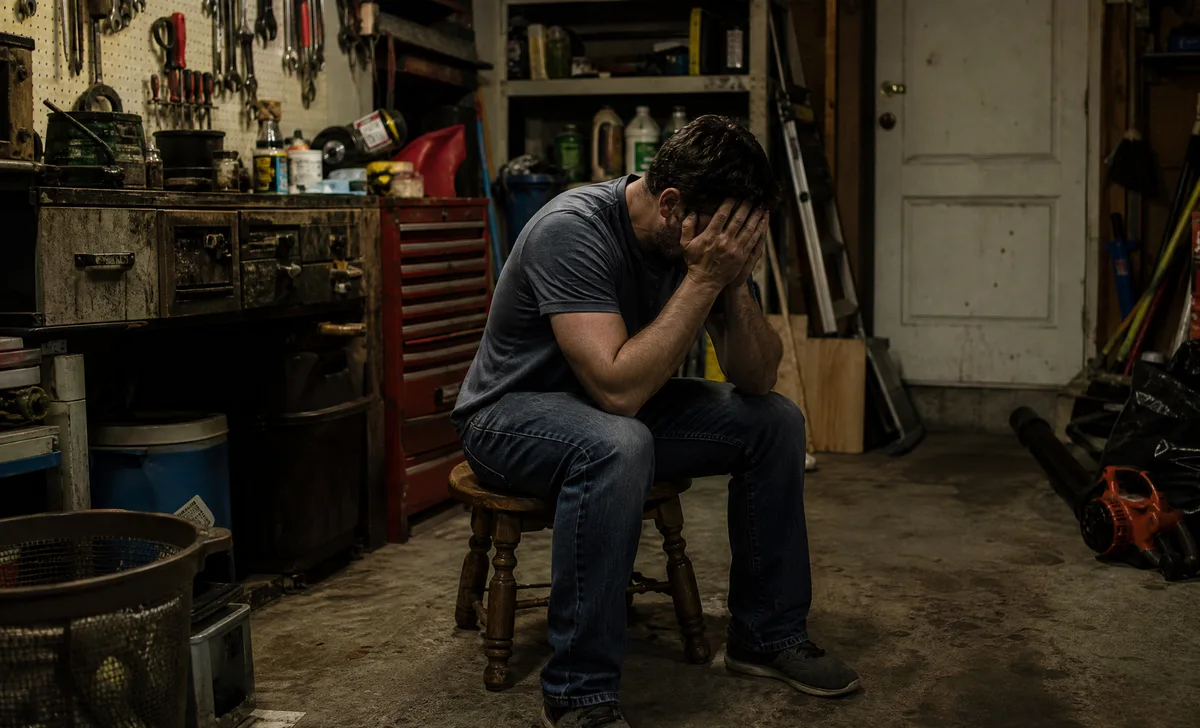
Afterwards, I went to the garage and just sat there. I put my head in my hands and cried. Not a matter of two. Full-on, ugly crying. I didn’t recognise myself anymore. I was angry, exhausted, and I was hurting the people I loved most.
My recognition out to check on me. She sat down next to me and said, “I don’t recognise you anymore.” Those words cut deep because they were true. I wasn’t the patient, calm, grateful person. I was a stranger wearing my face.
That was my breaking point. I knew I couldn’t keep going like this. Something had to give.
What Dad Depression Actually Looks Like (Hint: It’s Not What You Think)
Here’s the thing about depression in dads. It doesn’t always look like sadness. I wasn’t walking around crying all the time. I wasn’t talking about feeling hopeless. Instead, I was irritable. I was angry. I was withdrawing from everyone.
That’s what paternal depression often looks like. Studies show that about 1 in 10 new fathers experience depression after the birth of a child. Up to 15% experience anxiety. But most of us don’t recognise the signs.
Instead of sadness, we feel rage. Instead of crying, we snap. We isolate or recognise we drink more. We throw ourselves into work to escape. We feel numb. We lose interest in things we used to love.
The NHS notes that men are more likely to acknowledge fatigue, irritability, and sleep disturbances than to report feeling sad or worthless. That was definitely me. I would have told you I was “just tired” a hundred times before I admitted I was struggling.
Sleep deprivation is a huge trigger for this. When you don’t sleep, your brain can’t regulate your emotions. Your patience evaporates. Your fuse gets shorter and shorter. And if you’re already dealing with the stress of a new baby, it’s a perfect storm.
The Return-to-Work Reality Nobody Talks About
Here’s something most articles don’t cover. You’re up all night with a baby, and then you have to go to work the next day. You have to perform. You have to pretend everything is fine.
I work in a job where I need to be sharp. Making mistakes isn’t an option. But there I was, running on two hours of broken sleep, trying to look competent. It was a joke. I was a zombie in a suit.
I remember driving to work one morning and realising I didn’t remember the last five minutes of the drive. I had zoned out completely. That realisation more than anything. I could have crashed. I could have hurt someone.
Sleep deprivation affects your reaction time and decision-making. It’s like being drunk, but without the fun part. And yet, we’re expected to just power through it. Nobody at work asks how you’re sleeping. Nobody checks in on your mental health. You’re just supposed to handle it.
I started to resent my job. I resented my commute. I resented everything. The pressure to pretend I was fine while falling apart inside was overwhelming.
What Actually Helped Me (And Might Help You Too)
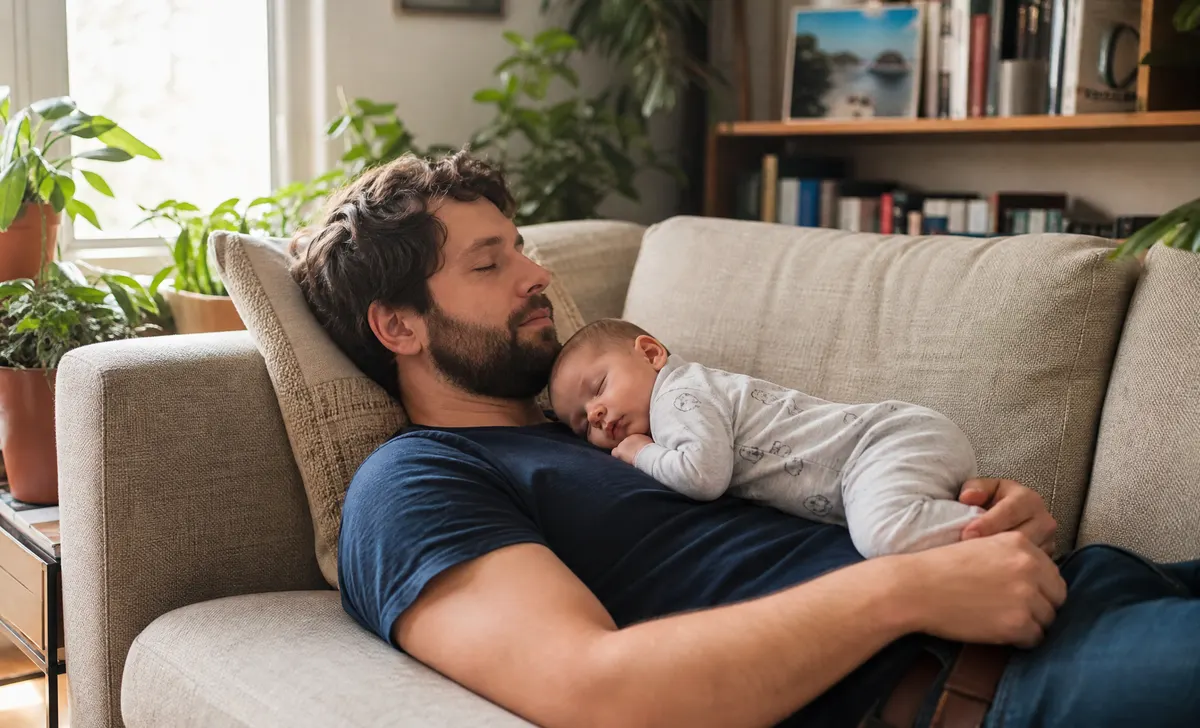
I’m not going to tell you I found a magic solution. I didn’t. But I did find things that made a real difference. Here’s what actually helped me survive.
Shift work with your partner. This was huge. My wife and I started taking turns. One of us would handle the baby from 10 p.m. to 2 a.m. The other would take 2 a.m. to 6 a.m. That gave each of us a four-hour uninterrupted block. It wasn’t eight hours. But it was something. And that four hours of solid sleep changed everything.
Nap like your sanity depends on it. Because it does. I started napping whenever I could. Twenty minutes. That’s all it took. Just closing my eyes on my lunch break or when the baby went down. Even a short nap helped reset my brain and calm my mood.
Lower your expectations. I had to accept that I wasn’t going to be Super Dad. I wasn’t going to get eight hours of sleep. I wasn’t going to be my old self for a while. And that was okay. The goal wasn’t perfection. The goal was survival. Permitting myself to be average for a bit took a lot of pressure off.
Watch the caffeine. Permitting myself coffee all day and beer at night. Both messed with my already-broken sleep. I cut back on both. It wasn’t easy. But it helped me sleep better during those precious few hours I actually got.
Move your body. I know, I know. You’re exhausted. The last thing you want to do is exercise. But even a short walk helped. It got me out of the house. It cleared my head. It calmed my nervous system. I started doing push-ups in the nursery while the baby was in the swing. Anything counts.
Eat something real. When you’re sleep-deprived, you reach for junk. I was living on coffee and leftover pizza. That made everything worse. I started doing some weekend batch cooking to have real meals ready to go. Having healthy food in the freezer meant I wasn’t surviving on garbage. If you’re too tired to cook, check out our guide to weekend batch cooking for dads who are done with takeout.
Give yourself grace. This was the hardest one. I had to stop beating myself up. I was doing a hard thing. Being a new dad is relentless. I wasn’t failing. I was surviving. And that was enough.
The Scripts I Used to Ask for Help (Because “I’m Struggling” Is Hard to Say)
Asking for help as a dad feels like admitting failure. We’re supposed to be the strong ones. The providers. The rock. But I learned that asking for help isn’t weakness. It’s strength.
The problem is, I had no idea what to say. “I’m struggling” sounded too vague. “I need help” felt too dramatic. So I came up with some scripts that actually worked. Here’s what I said.
To my wife: “I’m not okay right now. I need help. Can we talk about how we’re splitting nights?” This opened the conversation without making it sound like I was blaming her. It was about us as a team.
To a buddy: “Honestly, man, I’m struggling more than I thought I would. You ever feel like that?” Every single dad I said this to said yes. Every single one. It made me feel so much less alone.
To my doctor: “I’ve been sleeping terribly, and my mood is all over the place. I think I need to talk to someone.” That was the hardest one. But my doctor didn’t judge me. He nodded and gave me a referral. That’s all it took.
Men are significantly less likely to seek help for mental health issues. We wait until we’re in crisis. I waited too long. Don’t be like me. Use these scripts. Say the words. It gets easier once you start.
Where I Found Real Support (And Where You Can Too)
I want to give you actual places to go. Not vague advice like “talk to someone.” Here’s where I found real help.
Postpartum Support International. They have resources for dads too. I didn’t know that at first. I thought it was just for moms. But they have a helpline and can connect you with local support groups.
Fatherhood-specific support groups. I found an online group for new dads. Just hearing other guys talk about their struggles made me feel normal. We shared tips. We vented. We laughed. It helped more than I can say.
Employee Assistance Programs (EAPs). My work had a free counselling service I didn’t even know about. I called them, and they set me up with a therapist. Counselling was completely confidential and didn’t cost me a thing.
Therapists who specialise in paternal mental health. Not every therapist gets what dads go through. I found one who specialised in men’s mental health and fatherhood. That made a huge difference.
Your primary care is a great starting point. Just tell them what’s going on. They can refer you to the right people.
Untreated paternal depression can lead to relationship problems, increased conflict, and decreased bonding with your baby. Getting help isn’t selfish. It’s for your whole family. And if you’re feeling physically off too, don’t ignore that. Sleep deprivation and stress can mess with your hormones. New dads can see their testosterone drop by as much as 34%. If you’re feeling constantly drained, check out our article on low testosterone symptoms in dads —it might explain more than you think.
The Other Side — It Doesn’t Get Perfect, But It Gets Better
I’m not going to tell you everything is perfect now. I still have rough nights. My son still wakes up sometimes. I still get tired. But it’s different now.
I know what to look for. I know the signs that I’m spiralling. I have tools to cope. I have people I can call. And most importantly, I know I’m not alone.
That’s what I want you to take away from this. You are not broken. You are not a bad dad. You are a human being who is running on empty. And that is completely normal.
Sleep deprivation is brutal. It changes who you are. It makes you someone you don’t recognise. But it doesn’t have to be permanent. There is a way through it.
I got help. I changed recognise. I permitted myself to not be perfect. And slowly, I started to feel like myself again. Not the permitted version. But someone I could recognise in the mirror.
You can get there too. One step at a time. One night at a time. And if you recognise that won’t make you feel worse, we’ve got you covered with healthy snacks kids won’t notice Dad stealing. Small wins matter.
You’ve got this, Dad. I believe in you.

